Unlocking Creative Potential with the Mandala Cut and Emboss Template
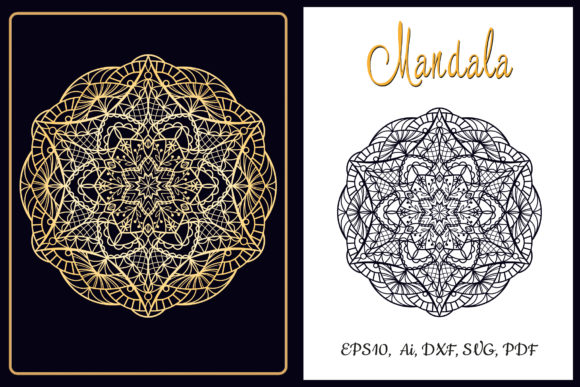
In the evolving landscape of digital design and physical crafting, the demand for high-quality, versatile assets has never been higher. Whether you are a professional graphic designer seeking intricate patterns for print media or a hobbyist looking to elevate a handmade card, the tools available define the quality of the final output. Among these essential resources is the Mandala. Cut and Emboss Template, a sophisticated asset designed to bridge the gap between complex geometric art and practical manufacturing processes.
This resource is not merely a static image; it is a comprehensive toolkit that enables users to create dimensional, tactile designs with precision. By combining the spiritual and aesthetic appeal of mandalas with the technical requirements of cutting and embossing machines, this template offers a unique solution for creators across various industries. The ability to download a complete package containing AI, EPS, SVG, DXF, and PNG formats ensures compatibility with almost any software ecosystem, from Adobe Illustrator to Cricut Design Space.
The Artistic Foundation of Mandala Designs
Mandalas have historically served as spiritual symbols in Hinduism and Buddhism, representing the universe, wholeness, and harmony. In modern design contexts, their value lies in their mathematical symmetry and infinite complexity. A mandala typically features a circular composition radiating from a central point, creating a sense of balance and visual flow. When applied to commercial products or personal projects, these patterns add an element of elegance and depth that simple shapes cannot achieve.
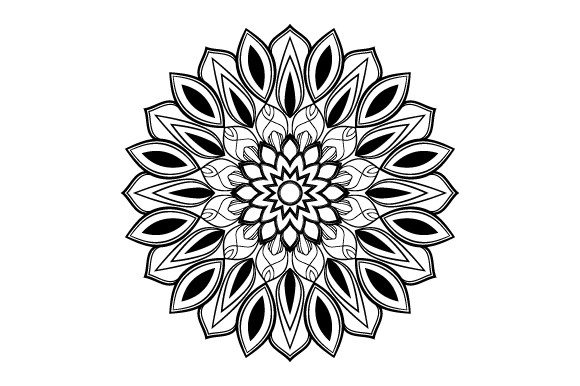
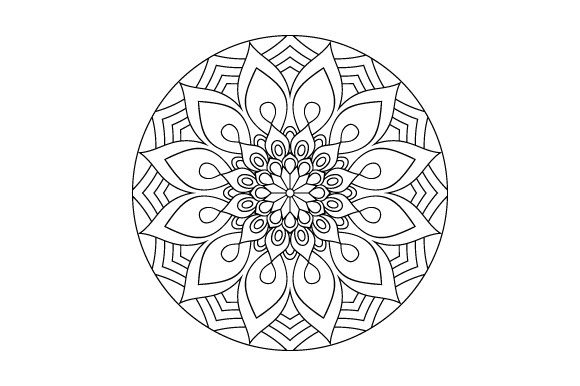
The specific Mandala. Cut and Emboss Template leverages this timeless geometry but adapts it for functional application. Unlike standard raster images that can become pixelated when scaled, this template is built on vector principles. This distinction is crucial for professionals who need to resize designs without losing clarity. The circular pattern serves as a decorative foundation that can be used alone or integrated into larger compositions. Its inherent symmetry makes it particularly effective for branding materials, packaging design, and textile printing where repetition and alignment are key.
Technical Specifications and File Versatility
The true power of this asset lies in its file architecture. Upon downloading, the user receives a ZIP archive containing multiple file types, each serving a distinct purpose in the creative workflow. The inclusion of AI (Adobe Illustrator) and EPS (Encapsulated PostScript) files ensures that professional designers can manipulate layers, adjust stroke weights, and convert paths with ease. These formats are the industry standards for high-end print production, allowing for precise color separation and scaling.
For those working with web graphics or screen-based media, the PNG version provides a ready-to-use raster image. It is rendered at 4000x4000 pixels with a resolution of 300dpi, guaranteeing crisp edges even on large displays or high-resolution prints. Crucially, this PNG is set against a transparent background, meaning it can be overlaid onto any color or texture without unsightly white boxes obscuring the design. This feature is invaluable for overlaying textures on product mockups or creating watermarks.
The SVG (Scalable Vector Graphics) format bridges the gap between print and digital fabrication. It is lightweight, code-based, and universally supported by web browsers and most cutting machine software. Meanwhile, the DXF (Drawing Exchange Format) file opens the door to CNC machining and industrial laser cutting applications, making the template accessible to manufacturers and engineers who work outside the realm of traditional paper crafts.
Practical Applications Across Industries
The versatility of the Mandala. Cut and Emboss Template allows it to be utilized in a wide array of sectors. Its primary function is to serve as a guide for creating dimensional effects, but its utility extends far beyond simple decoration.
- Printed Stationery and Greeting Cards: Card makers frequently use cut and emboss templates to create raised textures on invitations, wedding cards, and business stationery. The mandala pattern adds a luxurious feel that catches the light and invites touch, significantly increasing the perceived value of the item.
- Textile and Fashion Design: Designers can utilize the vector files to create stencils for fabric painting or to program embroidery machines. The circular nature of the mandala works exceptionally well for centering designs on t-shirts, scarves, and tote bags.
- Interior Decor and Wall Art: Large-scale versions of the pattern can be cut from wood, acrylic, or metal using the DXF file. These pieces can then be mounted on walls to create striking focal points in homes or commercial spaces like hotels and offices.
- Digital Product Creation: Educators and content creators can incorporate the transparent PNG into educational materials, presentation slides, or digital scrapbooking kits. The high resolution ensures that the details remain sharp regardless of the screen size.
The Workflow of Integration
Integrating this template into a project requires a streamlined approach. For physical production, the process begins by importing the vector file (AI, EPS, or SVG) into the software associated with your die-cutting or embossing machine. Because the file is pre-optimized, the user can immediately assign cut lines or embossing zones. The machine then reads the path data to physically press or cut the material.
For digital workflows, the PNG file is dragged directly into design software like Photoshop or Canva. Users can adjust opacity, blend modes, and layer order to create complex backgrounds. The transparency of the file is a critical feature here, as it allows the mandala to interact seamlessly with underlying colors and images. This flexibility supports a "mix-and-match" approach, where the mandala might serve as a border in one instance and a central motif in another.
Advantages of Vector-Based Templates
When selecting assets for long-term use, the choice between raster and vector is paramount. The Mandala. Cut and Emboss Template prioritizes vector technology, which offers distinct advantages over standard image files. The most significant benefit is scalability. A raster image becomes blurry when enlarged because it relies on a fixed grid of pixels. In contrast, a vector file uses mathematical equations to define lines and curves. This means the mandala can be resized from a small icon on a business card to a massive mural on a building facade without any loss of quality.
Another advantage is editability. With the AI and EPS files, a designer can isolate specific segments of the mandala. If a client prefers a smaller circle within the larger pattern, the designer can simply delete the outer rings without needing to recreate the entire artwork. This level of control saves time and reduces costs during the revision process. Furthermore, vector files generally have smaller file sizes compared to high-resolution raster images, making them faster to load and easier to share via email or cloud storage.
Considerations for Implementation
While the template is highly adaptable, successful implementation depends on understanding the limitations of different materials and machines. For physical embossing, the thickness of the paper or cardstock plays a vital role. Thicker materials may require more pressure from the embossing machine to achieve the desired depth, while thinner papers might tear if the cut lines are too dense. It is advisable to test a small sample before committing to a full production run.
Color management is another consideration. When converting vector files for print, ensure that the color mode is set to CMYK rather than RGB to avoid color shifts. The black lines intended for cutting should be set to "Overprint" or a specific spot color depending on the printer's requirements. For digital applications, RGB is the standard, but exporting in sRGB ensures consistent color rendering across different devices.
Additionally, users should be aware of the licensing terms associated with the download. While the template is designed for broad usage, some restrictions may apply regarding resale. Typically, these templates are intended for end-product creation rather than being resold as standalone digital files. Understanding these boundaries protects both the creator and the buyer.
Bridging Tradition and Modern Technology
The intersection of ancient artistic traditions and modern digital fabrication is where the Mandala. Cut and Emboss Template truly shines. It respects the intricate heritage of mandala art while embracing the efficiency of contemporary tools. This fusion allows for a democratization of high-quality design. Hobbyists who previously lacked access to professional-grade stencils can now produce work that rivals commercial standards.
For educators, this resource offers a tangible way to teach concepts of geometry, symmetry, and digital literacy. Students can explore how mathematical principles translate into visual beauty and then physically manifest those principles through cutting and embossing. Researchers in fields such as anthropology or psychology might find value in studying the psychological impact of symmetrical patterns on human perception, using these templates as standardized stimuli.
Conclusion: A Tool for Endless Creativity
The Mandala. Cut and Emboss Template represents more than just a downloadable file; it is a gateway to enhanced creativity. With its robust suite of formats including AI, EPS, SVG, DXF, and a high-resolution PNG, it caters to the diverse needs of professionals, consumers, and enthusiasts alike. The ability to apply this decorative circular pattern to both digital and physical products ensures its relevance in a rapidly changing market.
Whether you are designing a luxury wedding invitation, producing a batch of custom merchandise, or exploring new techniques in digital art, this template provides the structural integrity and aesthetic appeal necessary for success. By choosing a tool that combines technical precision with artistic depth, creators can unlock new levels of expression. As you embark on your next project, consider how the harmonious balance of a mandala can transform your work from ordinary to extraordinary.
If you have any questions regarding the usage of these files or need assistance with specific formatting, please contact me, Svetlana. Your journey into detailed, dimensionally rich design starts with the right tools, and this template is designed to support every step of that journey.