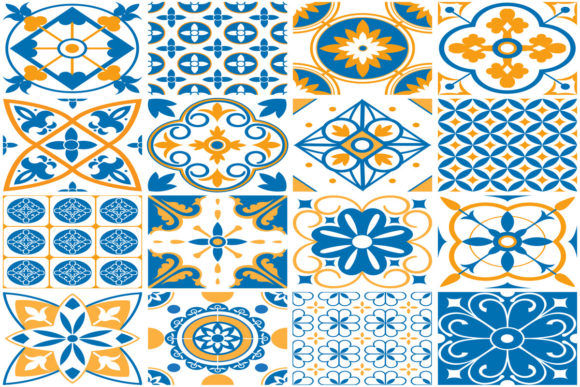
Mediterranean Pattern: Timeless Design for Modern Spaces
The Mediterranean Pattern is more than just a visual style; it is a design language rooted in centuries of cultural exchange, artistic evolution, and the warm, sun-drenched landscapes of Southern Europe. When you encounter the intricate details of decorative Lisboa seamless patterns or the bold geometry of Turkish mosaic tiles, you are looking at a legacy of craftsmanship that has survived the test of time. This aesthetic combines the rustic charm of Spanish stucco with the refined elegance of Portuguese azulejo tiles, creating a versatile toolkit for creators who want to infuse their projects with history and soul.
For designers, marketers, and entrepreneurs, understanding this pattern is about recognizing its emotional resonance. It evokes feelings of relaxation, luxury, and connection to nature. Whether you are designing a kitchen backsplash, a blog background, or a branding element for a boutique hotel, the Mediterranean Pattern offers a structured yet organic feel that stands out against modern minimalism. The specific combination of Arabesque motifs and ornamental elements provides a depth that flat colors simply cannot achieve.
The Anatomy of the Aesthetic
To effectively utilize these designs, one must first appreciate the components that make them unique. The core of this aesthetic lies in the interplay between geometric precision and fluid ornamentation. The decorative Lisboa seamless patterns often feature repeating arabesques—interlaced lines that form complex, infinite loops. These are not merely decorative; they represent a mathematical beauty found in Islamic art that was adopted and adapted throughout the Mediterranean region.
Complementing these fluid lines are the rigid structures of ornamental elements azulejo. Originating from Portugal but widely used across Spain and Italy, azulejos are tin-glazed ceramic tiles. In a vector context, these translate into sharp, high-contrast shapes that provide visual anchors. The Mediterranean Pattern thrives on this contrast: the softness of the arch and the hardness of the tile edge. Furthermore, the inclusion of mosaic tiles Turkish texture adds a tactile dimension. Even in digital formats, the suggestion of rough stone or polished ceramic invites the viewer to imagine the physical world behind the screen.
When working with a product file containing a vector EPS10 file, you have access to layers that allow for deep customization. Unlike raster images that pixelate when enlarged, the vector nature of these assets means you can scale a small logo detail up to a billboard size without losing the crisp definition of the Spanish kitchen background or the intricate details of the Portuguese decor.
Creative Applications Across Industries
The versatility of this design theme allows it to transcend traditional interior design. While the name suggests walls and floors, the applications for digital creators and business owners are vast. The key is to adapt the Mediterranean Pattern to fit the specific goals of your audience without overwhelming the content.
- Interior Design & Real Estate: For real estate agents or interior decorators, using a high-resolution JPEG preview or a customized vector version of these patterns can instantly elevate property listings. Imagine a virtual staging tool where users can apply a Turkish texture interior floor to an empty room. This helps clients visualize the potential of a space, bridging the gap between imagination and reality.
- Branding & Packaging: Small business owners in the food and beverage industry, particularly those selling olive oil, ceramics, or artisanal foods, find immense value here. A seamless pattern featuring azulejo motifs can be used as a background for packaging labels or website headers. It communicates authenticity and heritage, suggesting that the product inside is crafted with care and tradition.
- Digital Content & Blogging: Bloggers and educators can use these vectors to create custom graphics for social media posts or course materials. By isolating specific elements using a vector editor like Adobe Illustrator, you can create unique icons or dividers that break up long blocks of text. This keeps the reader engaged while maintaining a cohesive visual identity.
- Fashion & Textile Design: Freelance designers can leverage the Arabesque lines to create fabric prints or wallpaper designs. The repetitive nature of the Lisboa seamless patterns makes them ideal for textiles, where the pattern needs to flow continuously without visible breaks.
Adapting the Style for Modern Contexts
One of the most common challenges when working with historical styles is avoiding the "costume" effect. If a design looks too old-fashioned, it may fail to connect with a contemporary audience. The solution lies in adaptation. You do not need to use the entire Spanish kitchen background at full opacity to capture the essence of the style.
Consider desaturating the colors slightly to match a modern, muted palette. Instead of bright cobalt blues and vibrant terracottas, try pairing the Mediterranean Pattern with sage greens, slate greys, or warm beiges. This approach retains the structural integrity of the design while updating the mood. You can also experiment with transparency and layering. Overlaying a faint ornamental element azulejo over a solid color block creates a sophisticated texture that feels intentional rather than busy.
For digital platforms, speed and performance matter. While the source file is a high-quality vector, ensure that the final output is optimized. Use the JPEG 72ppi preview as a guide for how the pattern will look in web contexts, but always export your final assets based on the intended resolution. If you are embedding a background for a mobile app, a heavy vector file might slow down loading times. In such cases, simplifying the path complexity in your vector editor can improve performance without sacrificing visual impact.
Practical Tips for Customization
If you are new to editing vector files, the prospect of modifying complex patterns like Portuguese decor can seem daunting. However, the power of the EPS10 format is its accessibility. Most professional graphic software can open these files, allowing you to separate elements that are grouped together.
Start by identifying the core motifs. Is it the central medallion? The border strip? Once isolated, you can resize, recolor, or rearrange them to suit your project. For instance, if you are designing a wedding invitation, you might extract just the floral Arabesque corner and place it subtly in the margin. This creates a personalized touch that feels exclusive to the recipient.
Consistency is crucial for brand identity. If you decide to use the Mediterranean Pattern as part of your corporate identity, establish a set of rules. Will you always use the blue and white variation? Will you only use the pattern as a footer or as a main background? Documenting these choices ensures that every piece of communication, from email signatures to brochures, feels unified.
Furthermore, consider the psychological impact of the colors associated with these patterns. Blue often signifies trust and calm, while orange and yellow evoke energy and warmth. Align your color choices with the message you wish to convey. A financial advisor might prefer a cooler, more restrained interpretation of the mosaic tiles, whereas a travel agency would benefit from the vibrant, inviting tones of a Spanish kitchen scene.
Building a Cohesive Visual Story
Ultimately, the goal of using any design asset is to tell a story. The Mediterranean Pattern tells a story of openness, hospitality, and artistic richness. By integrating these elements thoughtfully, you invite your audience into a space that feels both grounded and aspirational. Whether you are a hobbyist creating scrapbook layouts or a publisher designing a book cover, the ability to manipulate these vector assets gives you control over the narrative.
Remember that good design is about balance. Let the ornamental elements breathe. Do not clutter the page with too many competing textures. Sometimes, a single, well-placed azulejo motif is more powerful than a wall of tiles. Use negative space to highlight the intricacy of the Arabesque lines. This restraint demonstrates a mastery of the medium and respects the intelligence of the viewer.
As you explore the possibilities within your vector file, keep your audience's needs at the forefront. Are they looking for inspiration? Clarity? Luxury? The Mediterranean Pattern is flexible enough to serve all these purposes, provided you approach it with intention. By combining the technical freedom of vector editing with the timeless appeal of this aesthetic, you can create work that resonates deeply and stands the test of time.